
How AI Chat Handles BFCM Traffic Spikes for Shopify Stores Without Hiring Seasonal Staff
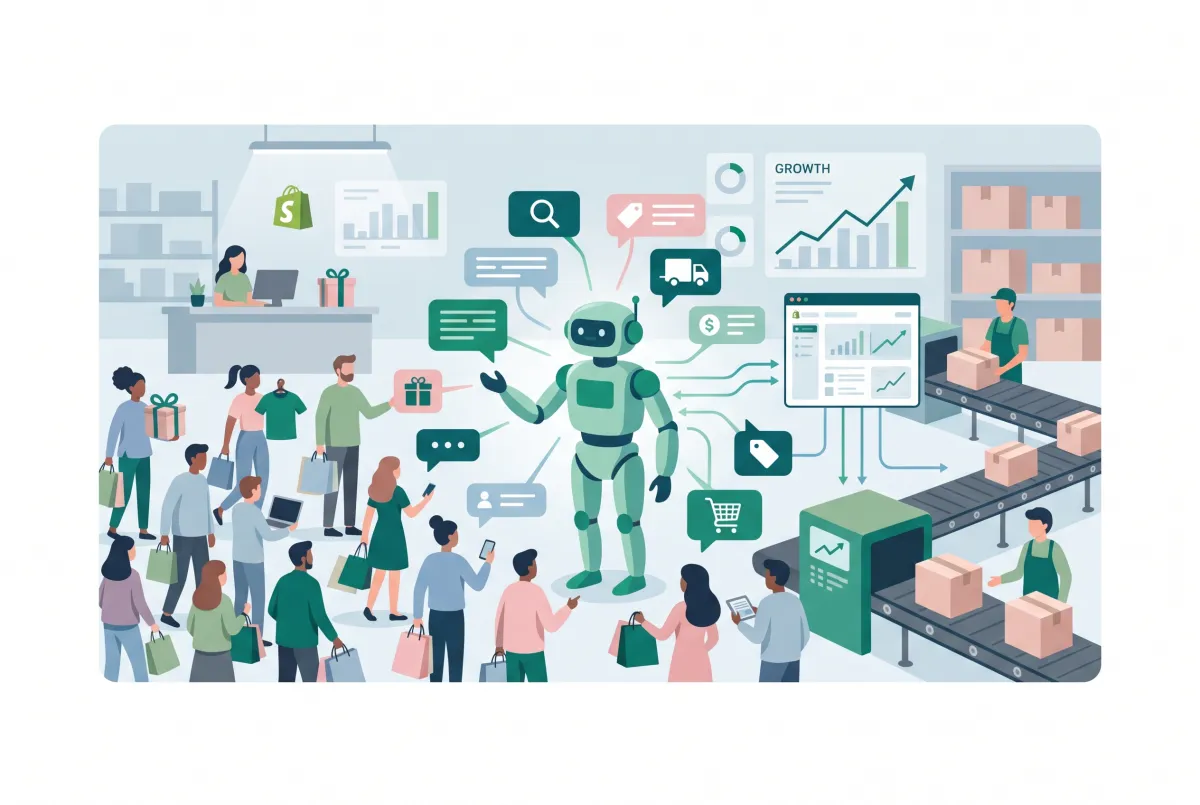
Your store runs fine on a normal Tuesday. Then Black Friday arrives, traffic multiplies overnight, and the support inbox goes from a trickle to a flood in about an hour. This is the exact moment most Shopify merchants reach for the wrong solution: hiring seasonal support staff. There is a better answer. AI chat can absorb the Black Friday and Cyber Monday surge for Shopify stores without a single seasonal hire, answering customers instantly while you focus on shipping orders and protecting your margins.
Here is the scale of what you are preparing for. Shopify merchants generated a record $14.6 billion in BFCM 2025 sales, up 27% year over year, with 81+ million consumers buying from Shopify-powered brands over the weekend. More than 94,900 merchants had their single highest-selling day ever during that stretch. Every one of those merchants faced a support wave. Most of them did not need to hire for it, and this guide walks through why, and how to get ready starting now in July while it is unhurried and cheap.
Why Does Customer Support Volume Spike So Much During Black Friday and Cyber Monday?
Support volume spikes because order counts spike, and every order carries a small probability of generating a question. Contact volumes typically rise to around double normal levels during Black Friday, with peaks of three to five times normal demand in fashion, electronics, and flash-sale retail. If you sell in those categories, plan for the high end.
The traffic itself is even more concentrated than the sales figures suggest. Black Friday traffic can spike to 5 to 10x your daily average, crammed into a narrow window that peaks roughly between 10am and 2pm local time, with a second wave in the evening. So the load is not spread politely across the day. It hits in bursts, and those bursts are exactly when a human team gets overwhelmed and reply times balloon.
What are people actually asking about? A huge share of it is repetitive. The single biggest category is WISMO, short for "where is my order." WISMO contacts jump from roughly a quarter of normal support volume to nearly half of all contacts during BFCM. Add in questions about discount codes not applying, stock availability, and shipping cutoffs, and the overwhelming majority of your holiday support load is repeatable, predictable, and answerable from data you already have.
That last point matters more than anything else in this article. Repeatable questions are exactly what software handles well. You are not fielding thousands of nuanced philosophical debates during BFCM. You are answering the same eight questions a few thousand times, and a human typing those answers by hand at 11am on Black Friday is an expensive way to do something a machine does instantly.
Why Is Hiring Seasonal Support Staff Getting Harder (and More Expensive) Every Year?
Seasonal hiring is getting harder because the talent pool is shrinking at the worst possible time. Retailers planned to add only 265,000 to 365,000 seasonal positions for November and December 2025, a sharp drop from 442,000 in 2024 and the lowest level of seasonal retail hiring in 15 years. Fewer seasonal workers in the market means more competition for the good ones, and you are competing against Amazon and every big-box chain for the same people.
Then there is the cost, which is brutal for a lean store. A temporary seasonal support hire runs roughly $3,500 to $11,000 per person for an 8 to 10 week engagement once you add up recruiting, training, wages, and offboarding. Compare that to AI-handled interactions at roughly $0.50 to $0.70 each. For a solo founder or a two-person team, spending eight grand on a temp who ramps up right as the sale ends is not a rounding error. It is a real chunk of your holiday profit.
The timing problem is the part nobody wants to say out loud. A seasonal hire needs to learn your product catalog, your return policy, your shipping rules, and your tone before they are useful. That ramp takes weeks. BFCM itself is basically four days of peak. So you pay full price for partial coverage during the only window that actually matters, and the person finally gets good at the job right as the reason for the job disappears.
Here is my honest opinion, and it is not a subtle one. Hiring seasonal support staff for BFCM in 2026 is an increasingly bad trade. The pool just hit a 15-year low, so you are fishing in a smaller pond exactly when you need the catch most, and by the time a temp is trained on your catalog and refund policy, the sales window is already closing. If you are still budgeting for seasonal support hires this year, you are solving a math problem, not a customer service problem. AI chat solves that math problem for close to nothing.
What Happens to Sales When Shopify Customers Can't Get Answers During a BFCM Traffic Surge?
You lose the sale, and you often lose the customer too. Shoppers during BFCM have high intent but zero patience. Research shows 71% of shoppers expect a response within five minutes, and 61% will switch to a competitor after a single bad support experience. During a flash sale, a competitor is one browser tab away, and the discount clock is ticking for both of you.
The cruel twist is that BFCM shoppers are more ready to buy than at any other time of year. Cart abandonment actually drops to roughly 58-62% during Black Friday, down from about 70% on a normal day, because urgency and real deals push hesitant shoppers over the line. So the intent is unusually high, which means every unanswered question during the surge carries an outsized cost. You are not losing a maybe-someday browser. You are losing someone who had their card out.
Think about the mechanics of a single lost sale. A shopper adds a $90 jacket to cart, then wonders whether the medium will fit or whether their code stacks with the sale price. They open chat. Nobody answers for twenty minutes because your one human is buried. The shopper closes the tab.
That is not a support failure filed under "customer service." That is $90 of revenue that walked, and it is why unanswered questions during a spike bleed money fast. We break down the mechanics of that leak in detail in our guide on how AI chat recovers Shopify sales lost to unanswered questions.
Multiply one lost jacket by the hundreds of questions arriving during your peak two-hour window and the number gets uncomfortable. Slow support during BFCM is not a soft problem you fix later. It is a direct, measurable drain on the single most profitable weekend of your year.
How Does AI Chat Absorb a 5-10x Traffic Spike Without Adding Headcount?
AI chat absorbs the spike because software has no queue. A human answers one conversation at a time. AI chat answers a thousand shoppers at the same instant, whether it is 11am on Black Friday or 3am on Cyber Monday, and the reply time stays flat no matter how steep the surge gets. That is the whole game: your support capacity stops being tied to how many people you employ.
The cost curve is the other half of it. A human agent handling a routine query costs real money in wages and time. The same query handled by AI chat costs cents. When your volume triples or quintuples during the peak window, a human team means paying for more bodies or watching wait times explode.
AI cost scales sub-linearly, so the thousandth conversation costs almost nothing more than the tenth. You are not adding headcount to meet demand. The software just handles it.
This is the same logic that lets small teams cover a global audience without staffing overnight shifts. BFCM is worldwide now, and shoppers in different time zones hit your store at hours when no sane human wants to be answering chat. AI does not care what time it is. We cover that coverage model in our piece on how AI chat covers every time zone without a 24/7 support team, and BFCM is that scenario compressed into four intense days.
None of this replaces having a human in the loop for the genuinely hard stuff. Fraud disputes, a customer who is upset about a botched order, a weird edge case your policy does not cover: those still deserve a person. The point is that AI should be your primary lever, handling the overwhelming majority of repetitive questions at machine speed, with a human as the fallback for the rare cases that actually need judgment. Most competitor advice has this backwards, treating hiring as the default and AI as the nice-to-have. Flip it.
One more thing worth saying: your support readiness and your infrastructure readiness are two different projects, and you need both. AI chat handles the questions, but your storefront still has to stay up under the traffic. If you have not stress-tested the store itself, our guide on building a Shopify store that handles 10x more traffic without crashing is the companion piece to this one.
How Do You Get Your AI Chat Ready for BFCM Before the Rush Hits (Starting Now, in July)?
You get ready by setting it up now, in the slow months, and testing it against real questions before the stakes are high. July is the ideal time precisely because there is no pressure. You can train the AI, watch how it answers, fix the gaps, and iterate calmly. Do this in November and you are debugging your chatbot live during the biggest sale of the year, which is a nightmare nobody deserves.
Start by getting your AI chat grounded in your actual store. It needs to know your products, your collections, your policy pages, and your FAQ content. This is where the choice of tool matters a lot. An app like RagChat: AI Chatbot and Livechat answers from your real products, collections, and pages rather than guessing from a generic model, and its free plan includes unlimited AI replies while learning up to 200 products. For a lean store getting BFCM-ready without a budget, unlimited replies on the free tier is exactly the shape of tool you want going into a traffic spike.
Next, feed it the questions BFCM will actually generate. Pull your support history from last year, or from the last few months, and list the recurring themes: sizing, shipping times, return windows, how discounts stack, whether an item is in stock. Make sure the AI has a clear, correct answer for each. The more of your real language it learns now, the less it improvises later.
Then test it like a skeptical customer. Open the chat and ask the awkward questions: "Does my student discount work with the Black Friday code?" "When is the last day I can order to get it by Christmas?" "Is the blue one back in stock?" Note where the answers are vague or wrong, and fix the source content those answers come from. A weekend of testing in July is worth more than any amount of scrambling in November.
A simple July-to-November prep checklist
- July: Install and connect your AI chat, let it learn your full catalog and policy pages, and run your first round of test questions.
- August: Fix the weak answers you found, write clear FAQ content for anything the AI stumbled on, and confirm order-tracking is wired up.
- September: Draft your BFCM-specific answers for promo codes, shipping cutoffs, and extended holiday return windows, even if the exact dates are not final.
- October: Load the finalized promo and cutoff details, do a full dry run, and decide who your human fallback is for edge cases.
- November: Final check the week before, then let it run. You should be watching, not building.
Setting up chat from scratch is its own small project if you have never done it. Our 2026 checklist for setting up live chat and AI customer support walks through the initial install and configuration, and it pairs naturally with this BFCM prep timeline.
Can AI Chat Handle Holiday-Specific Questions Like Promo Codes, Stock Levels, and Shipping Cutoffs?
Yes, but only if its answers are grounded in your live data rather than a generic model guessing. This is the single most important technical distinction in this entire article, so pay attention here. A chatbot that invents answers is worse than no chatbot at all during a flash sale, because a confident wrong answer about stock or a discount code creates a support ticket and a refund instead of preventing one.
Picture the failure. A shopper asks "is the code BFCM30 still valid and is the medium in stock?" A generic AI that is just pattern-matching language might cheerfully say "yes to both" because that sounds like a helpful reply. If the code expired an hour ago and the medium sold out, you have just promised something you cannot deliver, at scale, to every shopper asking the same thing. That is the flash-sale hallucination risk, and it is real.
The fix is grounding. Your AI chat has to read your actual current inventory and your actual active promotions, not improvise. This is exactly why an app grounded in live product and inventory data, like RagChat, matters more during BFCM than at any other time. It answers from your real products and pages, so "is the medium in stock" is checked against the store, not guessed. During a flash sale where stock changes by the minute, that difference is the line between preventing tickets and manufacturing them.
Beyond promos and stock, the holiday-specific question you will get relentlessly is the shipping cutoff. "If I order today, will it arrive before Christmas?" A grounded AI can answer this consistently and instantly the moment you load your carrier cutoff dates, and it will answer it the same correct way at 2am as at 2pm. Getting that answer right protects you from a wave of angry "where is my gift" messages in mid-December.
There is also a whole category of pre-purchase product questions that spikes during BFCM because so many buyers are brand new to your store. First-time holiday shoppers ask about materials, sizing, compatibility, and use cases before they trust you enough to buy. Handling those well is a conversion lever, not just a support one, and we go deep on it in our guide to using AI product Q&A chat to increase Shopify conversion on complex catalogs. During BFCM, answering "will this fit my setup" instantly is often the difference between a sale and a bounce.
What Should You Do With Your AI Chat Data After BFCM Ends?
Do not shut it off and walk away, because the two most valuable phases happen after the sale. First comes the return and refund wave in December and January. Second comes the goldmine of chat data that tells you exactly what to fix, stock, and staff for next year. Merchants who ignore both leave real money and real insight on the table.
The return wave is predictable and heavy after a record sales weekend. All those gift purchases and impulse buys generate a spike in "how do I return this" and "where is my refund" questions weeks after BFCM itself. Your AI chat should already know your return policy and be handling these at volume, which keeps January from turning into a second support crisis. Better still, good pre-purchase answers reduce returns in the first place, a connection we unpack in our guide on reducing Shopify product returns with AI chat before the order ships.
Now the part almost nobody does: mining the chat logs. Every question a shopper typed during BFCM is a data point about demand, confusion, and missed opportunity. If forty people asked whether you had a product in a color you do not stock, that is a product decision. If a hundred people got confused about how your discount stacked, that is a merchandising fix. Your logs are the least biased customer research you will ever get, because people typed real questions with real intent, not survey answers.
Pull the patterns and act on them. Which products drove the most pre-purchase questions? Which questions correlated with the sale not happening? What did people ask for that you did not carry? We walk through how to extract this systematically in our piece on what your Shopify chatbot logs reveal about product demand. This is how you turn one chaotic weekend into a clear plan for next year's inventory and promotions.
Finally, use the data to right-size your plan for BFCM 2026. If AI handled the vast majority of your volume cleanly, say nine out of ten conversations, and a human only needed to step in for a handful of genuine edge cases, you have your answer about seasonal hiring: you did not need it, and you will not need it next year either. If a specific question type kept slipping through, that is a training gap you fix in the calm months, not a reason to hire a temp. The whole loop gets cheaper and sharper every year you run it.
What's the Bottom Line for Lean Shopify Merchants?
BFCM is a data problem wearing a staffing costume. The questions are repetitive, the timing is predictable, and the answers live in data you already have. Software handles that pattern better than a rushed seasonal hire ever could, at a fraction of the cost, with reply times that do not budge when traffic goes 5 to 10x.
Set up an AI chat like RagChat now, in July, while it is quiet and cheap. Ground it in your real products and inventory so it never guesses during a flash sale. Keep one human on call for the rare hard cases, and let the machine handle the flood. Then mine what you learn to make next year easier. That is how a solo founder or a two-person team covers the biggest weekend of the year without hiring a single seasonal support staffer, and honestly, does it better.

RagChat: AI Chatbot & Livechat
SponsoredAI chat that answers from your real products. Unlimited AI replies on the free plan.
Related Articles
Learn how to build a Shopify store that handles 10x more traffic without crashing. Covers speed optimization, app audits, checkout, and scale readiness.
AI Chatbot for Shopify: How to Automate Customer Support and Increase Sales
Learn how an AI chatbot for Shopify automates customer support, recovers abandoned carts, and boosts sales with 24/7 replies and smart product upsells.

AI chat support for solo Shopify founders handles repetitive questions 24/7, so you can skip hiring, dodge burnout, and keep sounding like yourself daily.
WISMO tickets can eat up to 50% of a growing Shopify store's support inbox. See how AI chat connected to real order data auto-answers them 24/7, for free.
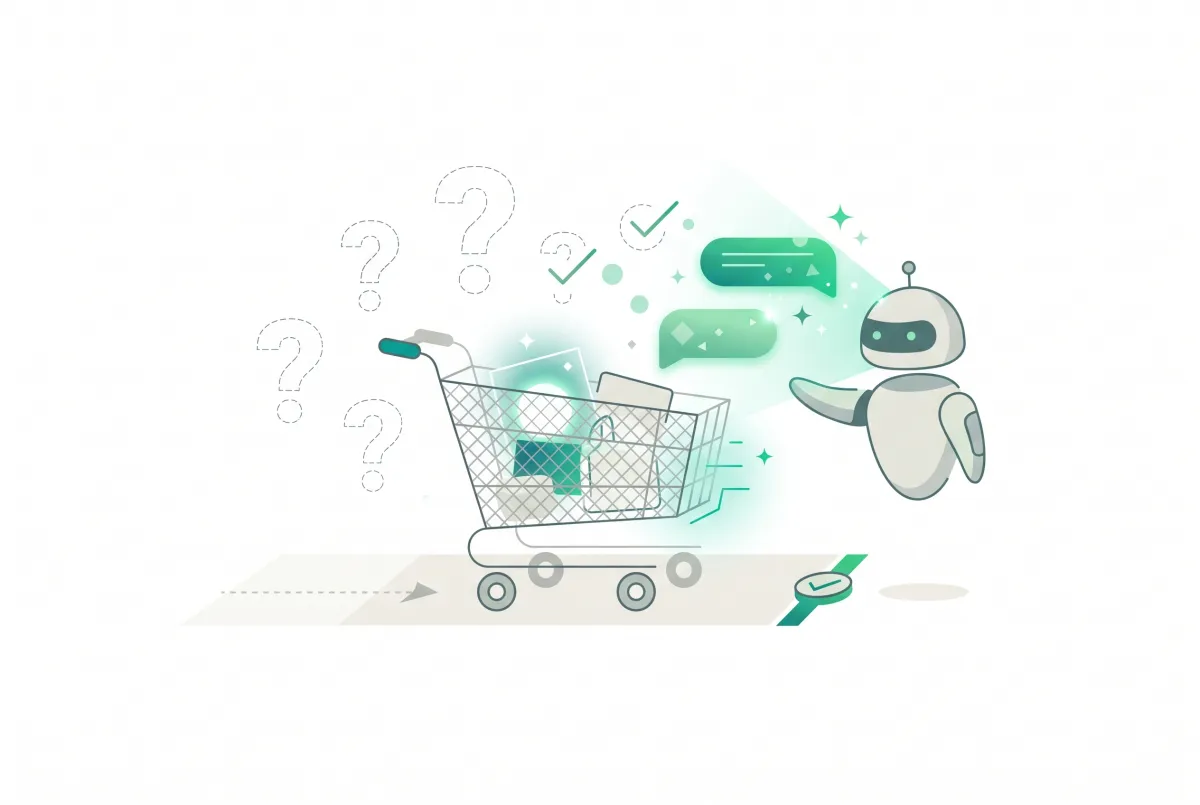
Most Shopify cart abandonment isn't price shock, it's an unanswered question. See how real-time AI chat answers objections before shoppers leave.
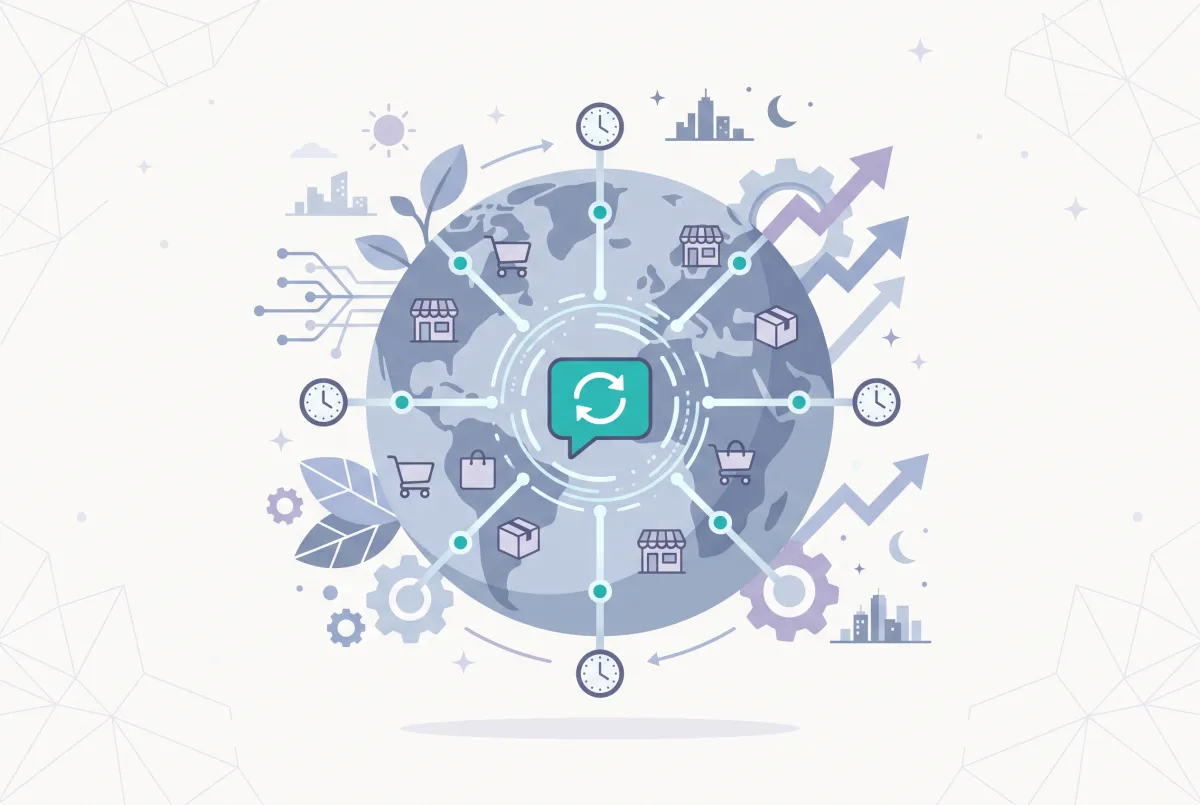
AI Chat for Global Shopify Brands: Covering Every Time Zone Without a 24/7 Support Team
Selling to EU, APAC, or global customers on Shopify? See how AI chat covers every time zone without hiring night shifts, overseas staff, or missing sales.