
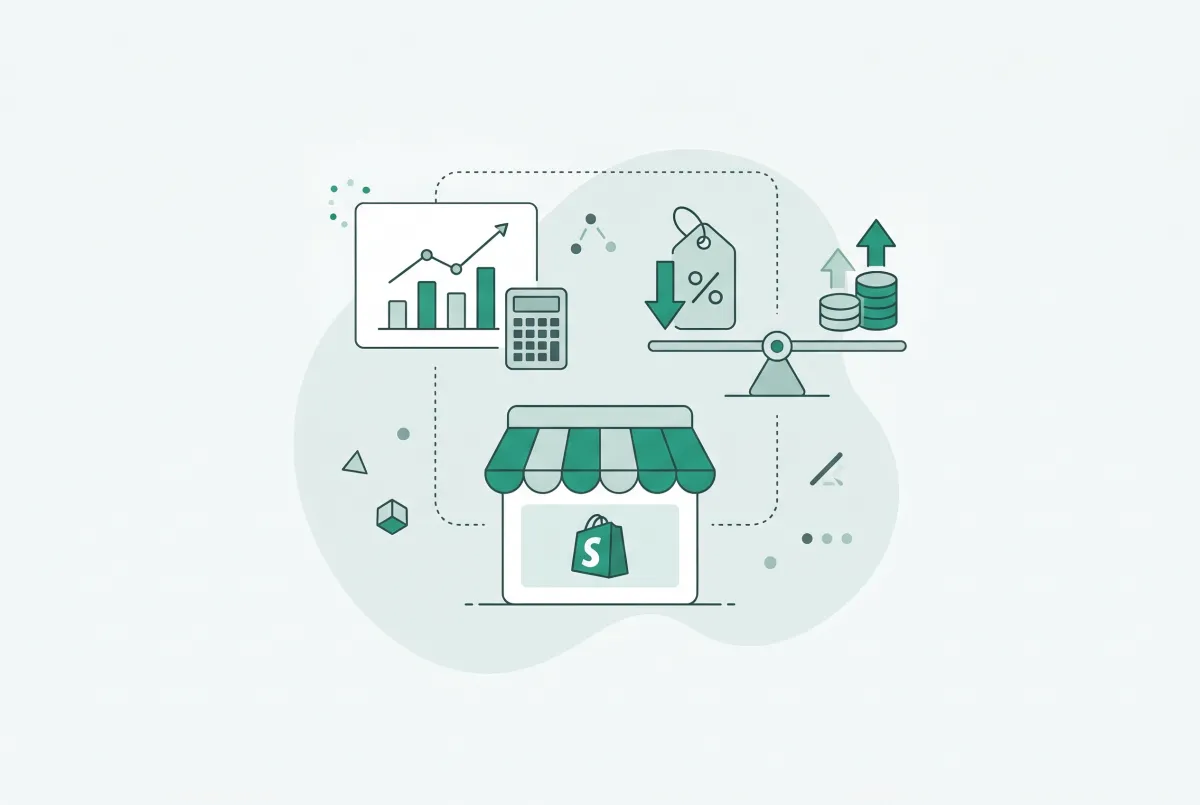
Most Shopify merchants run their first sale with pure optimism. They slash prices, blast an email, and watch the orders roll in.
But when the dust settles, the profit report tells a different story. Learning how to run a Shopify sale the right way means understanding the math before you ever touch a discount code. Otherwise, you're just buying revenue at the expense of your business.
A sale that doubles your orders can still lose you money. The difference between a profitable promotion and an expensive mistake comes down to preparation, structure, and knowing when to walk away from the discount button entirely.
Why Do So Many Shopify Sales Actually Hurt Your Business?
They hurt because merchants focus on top-line revenue while ignoring what discounts do to their unit economics. A study by Invesp found that 57% of e-commerce retailers target the wrong customers with their discount offers, meaning the majority of sales promotions reach people who would have bought at full price anyway.
That's money left on the table. Literally.
The average net profit margin for Shopify stores sits at roughly 10%, with most smaller stores running at 5% or lower. When you're operating on razor-thin margins like that, a 20% discount doesn't just nibble at your profits. It devours them.
If your margin is 5% and you discount 20%, you're paying customers to shop with you.
Then there's the behavioral damage. Ecommerce brands that rely heavily on discounts to acquire customers consistently see lower lifetime value, lower satisfaction scores, and higher revenue churn. You're not just losing money on the sale itself. You're attracting the least loyal segment of your market.
Average ecommerce discount rates routinely land between 10% and 30% depending on industry, with fashion and media sectors pushing even higher during peak season. That kind of race to the bottom forces every store in the category to compete on price rather than value. Small merchants with thin margins simply cannot survive that game long-term.
How Do You Calculate Your Margin Floor Before Running Any Discount?
You calculate it by working backward from your break-even point, not forward from your desired discount percentage. Every product in your catalog has a margin floor: the lowest price you can charge and still cover your costs.
Here is how this works with real numbers. Say you sell a product for $40. Your cost of goods is $24, giving you a $16 gross margin (40%). If you run a 20% discount, your sale price drops to $32, and your margin per unit shrinks from $16 to $8.
That is a 50% margin reduction from a 20% price cut.
Now do the volume math. Before the sale, selling 100 units generates $1,600 in gross profit. At the discounted price, you need to sell 200 units just to hit that same $1,600.
Can your traffic, inventory, and fulfillment operation handle double the orders? Probably not without additional costs that eat into your margin even further. The steeper the discount, the more disproportionate the volume requirement becomes.
The Quick Margin Floor Formula
- Take your product cost (COGS + shipping + packaging)
- Add your fixed cost allocation per unit (rent, software, payroll divided by monthly units sold)
- That total is your absolute floor. Any price below it means you lose money on every sale.
- Add your minimum acceptable profit per unit (even $2 to $3 matters at scale)
- That final number is your margin floor. Never discount below it.
Run this calculation for your top 20 products before building any sale. If you're managing hundreds of SKUs, use a spreadsheet or bulk product editing tools to audit pricing across your entire catalog before you start discounting.
Which Types of Shopify Sales Protect Margins Better Than Others?
Tiered discounts and bundles protect margins far better than flat percentage-off sales. The type of promotion you choose matters more than the discount amount, because different structures shift customer behavior in different ways.
Here is how the main sale types compare based on margin impact.
Flat Percentage Off (Worst for Margins)
A storewide 20% off sale is the bluntest instrument in your toolbox. It discounts your best sellers alongside your slow movers, regardless of their individual margin profiles. Every dollar of revenue takes the same hit. This is the approach that kills small stores.
Tiered Spend Thresholds (Better)
"Spend $100, save $15" protects margins because it forces a higher cart value. A customer who would have spent $60 now adds items to hit the threshold. Your effective discount rate drops as the cart grows.
If someone spends $120 to save $15, that is only a 12.5% discount, and you have moved more inventory in the process.
Bundle Discounts (Best for Margins)
Bundling products together lets you control the perceived discount while maintaining actual margin. You are not cutting prices. You are increasing basket size.
If you're already offering custom product options, bundling complementary items together is a natural extension that customers genuinely appreciate. Bundles consistently drive higher average order values because shoppers perceive a better deal without you actually slashing unit prices.
BOGO and Gift-With-Purchase (Situational)
Buy-one-get-one works when your marginal cost of the free item is low. A skincare brand giving a free sample-size product with a full-price purchase is a smart move that builds goodwill. Giving away a second full-size product at zero margin is not.
Compare-At Price Strategy
Shopify's built-in compare-at price feature lets you show a crossed-out original price next to the sale price. Use this carefully.
If every product in your store permanently shows a compare-at price, it signals to customers (and to Google) that your "real" price is always the lower one. Reserve compare-at pricing for genuine, time-limited promotions. Permanent fake markdowns make your store look like a clearance rack.
How Do You Structure a Sale So Customers Don't Get Addicted to Discounts?
You structure it with strict time limits, genuine scarcity, and enough full-price periods between sales that customers learn your regular price is the norm. Discount dependency is real, and it is one of the hardest habits to break once your audience develops it.
Research shows that 62% of U.S. consumers actively search for promo codes before completing a purchase. Once your customers figure out that a sale is always around the corner, they will stop buying at full price forever.
Running a storewide Shopify sale more than a handful of times a year is not a marketing strategy. It's an admission that your prices are wrong. If you need a 30% discount to convert, the real problem is either your value proposition or your traffic quality, and no amount of BFCM urgency timers will fix that. The merchants who build durable Shopify businesses treat discounts like a controlled burn: deliberate, infrequent, and always tied to a specific outcome like clearing old inventory or acquiring a new customer segment.
Here are the rules that prevent discount addiction:
- Cap sale frequency. Two to four major sales per year maximum. Your customers should be surprised when a sale happens, not expecting it.
- Never repeat the same discount. If you did 20% off last time, try a bundle deal or gift-with-purchase next time. Predictable patterns train waiting behavior.
- Use segment-specific offers. Send a discount only to customers who haven't purchased in 90+ days. Your active buyers don't need a price incentive.
- Set hard deadlines and honor them. If the sale ends Sunday, it ends Sunday. Extending sales teaches customers that your deadlines are fake.
- Build value instead of cutting price. Free shipping thresholds, loyalty points, and exclusive early access create urgency without margin erosion. Stores with strong product reviews and ratings convert better at full price because trust reduces the need for a discount.
How Do You Run a Shopify Sale and Revert Prices Without Errors?
You use automation, not manual updates. The single biggest operational risk in running a Shopify sale is the price rollback. Changing hundreds of prices for a weekend sale is tedious but manageable. Changing them all back correctly on Monday morning is where things fall apart.
Here is what goes wrong when merchants handle this manually. They export a CSV, change the prices, reimport. The sale runs. Then they try to reimport the original prices and discover they forgot to save the original file, or the reimport overwrites other changes made during the sale.
Three products get missed and stay discounted for weeks without anyone noticing. It happens more often than you would think.
Shopify's native bulk editor works for small catalogs, but it does not support scheduling or automatic reversion. For anything beyond a handful of products, you need a tool that handles the full lifecycle: set the sale prices, schedule the start, and automatically revert to original prices when the promotion ends.
Edify is built specifically for this workflow. It lets you apply bulk price changes with scheduling and auto-revert, so your sale starts and stops on time without manual intervention. You preview every change before it goes live, and if something looks wrong, one-click undo rolls everything back.
Whatever tool you choose, follow this process:
- Export a backup. Always save your current prices before touching anything. A CSV snapshot takes 30 seconds and could save you hours of damage control.
- Test on a small batch first. Apply your discount to 5 to 10 products, verify they look correct on the storefront, then roll it out to the full catalog.
- Schedule the revert before the sale starts. Don't rely on your memory at midnight on the last day. Automate it.
- Verify after rollback. Spot-check 10 to 15 products after the sale ends to confirm prices reverted correctly. Trust but verify.
How Do You Measure Whether Your Shopify Sale Was Actually Profitable?
You measure it by comparing your total gross profit during the sale period against what you would have earned at full price with your normal order volume. Revenue alone tells you nothing useful.
A sale that generates $50,000 in revenue but only $2,000 in gross profit is objectively worse than a normal week that generates $30,000 in revenue and $9,000 in gross profit.
Here are the metrics that actually matter:
Gross Profit Per Order
Take your total gross profit during the sale and divide by the number of orders. Compare this to your average gross profit per order during non-sale periods. If it dropped by more than your discount percentage, you lost more margin than expected, likely because customers cherry-picked your lowest-margin products.
Incremental Revenue
How much of the sale revenue was truly incremental? If you normally sell 50 units per day and sold 80 during the sale, only 30 units are incremental. The other 50 would have sold at full price.
Your real return on the discount is the margin on those 30 extra units minus the margin you gave away on the 50 baseline units.
Customer Acquisition Cost
If the sale's goal was to acquire new customers, calculate what you paid per new customer. Add your ad spend, the margin you sacrificed on discounted orders, and any additional fulfillment costs. If the sale brought in customers at $45 each and your normal CAC is $30, the discount did not help.
Post-Sale Repeat Purchase Rate
This is the metric that separates good sales from bad ones. Track whether customers who bought during the sale come back within 60 to 90 days at full price. If they don't, you attracted bargain hunters, not customers.
Inventory Clearance Rate
If the sale's purpose was clearing old inventory, measure what percentage of target SKUs you actually moved. Getting rid of slow inventory at reduced margin is legitimate because it frees up cash and warehouse space. But if only 20% of your clearance items sold, the sale wasn't targeted enough.
Build a simple post-sale report that captures these five metrics. Run it after every promotion. Over time, you will develop a clear picture of which sale types work for your store and which ones just generate noise.
Related Articles
Shopify Pricing Strategies: How to Price Products for Maximum Profit
Stop leaving money on the table. Learn Shopify pricing strategies that actually work, with real cost formulas, psychology tactics, and testing methods.
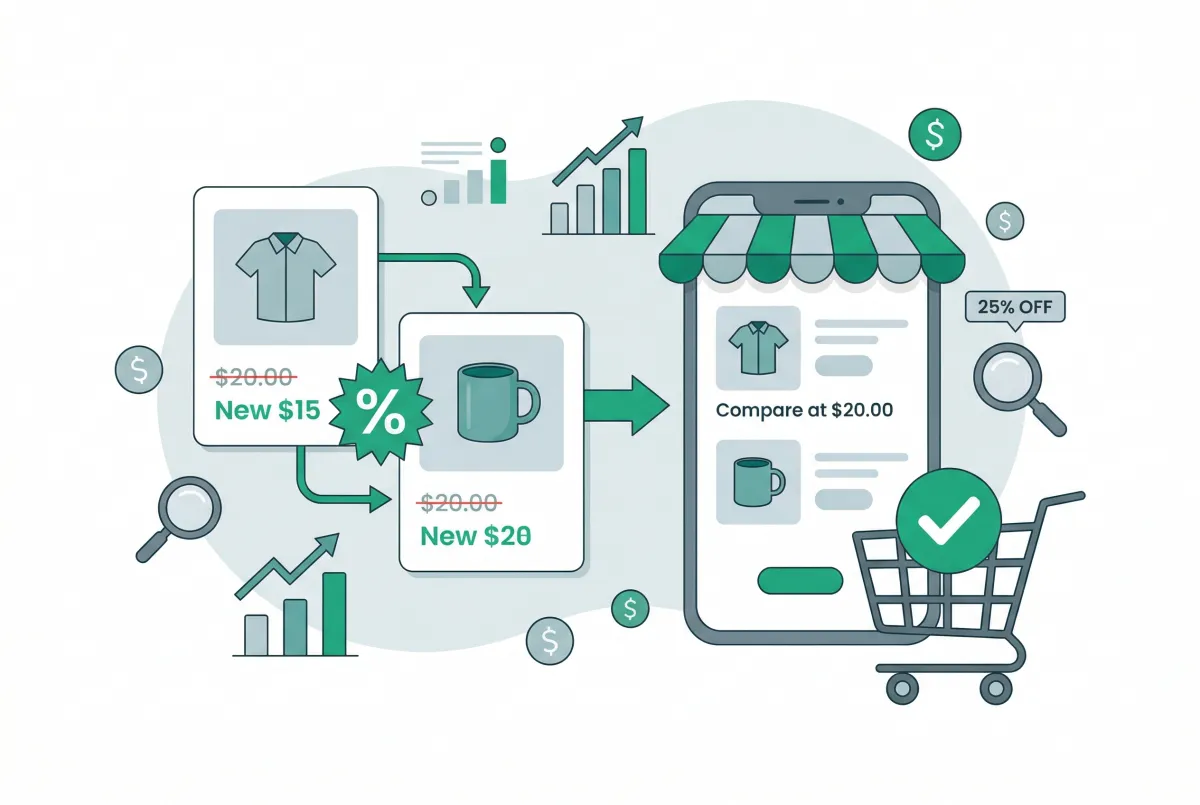
Compare-at Pricing on Shopify: How to Show Discounts That Actually Convert
Learn how compare-at pricing on Shopify works, how to set it up correctly, and the strategies that turn strikethrough pricing into real conversions.
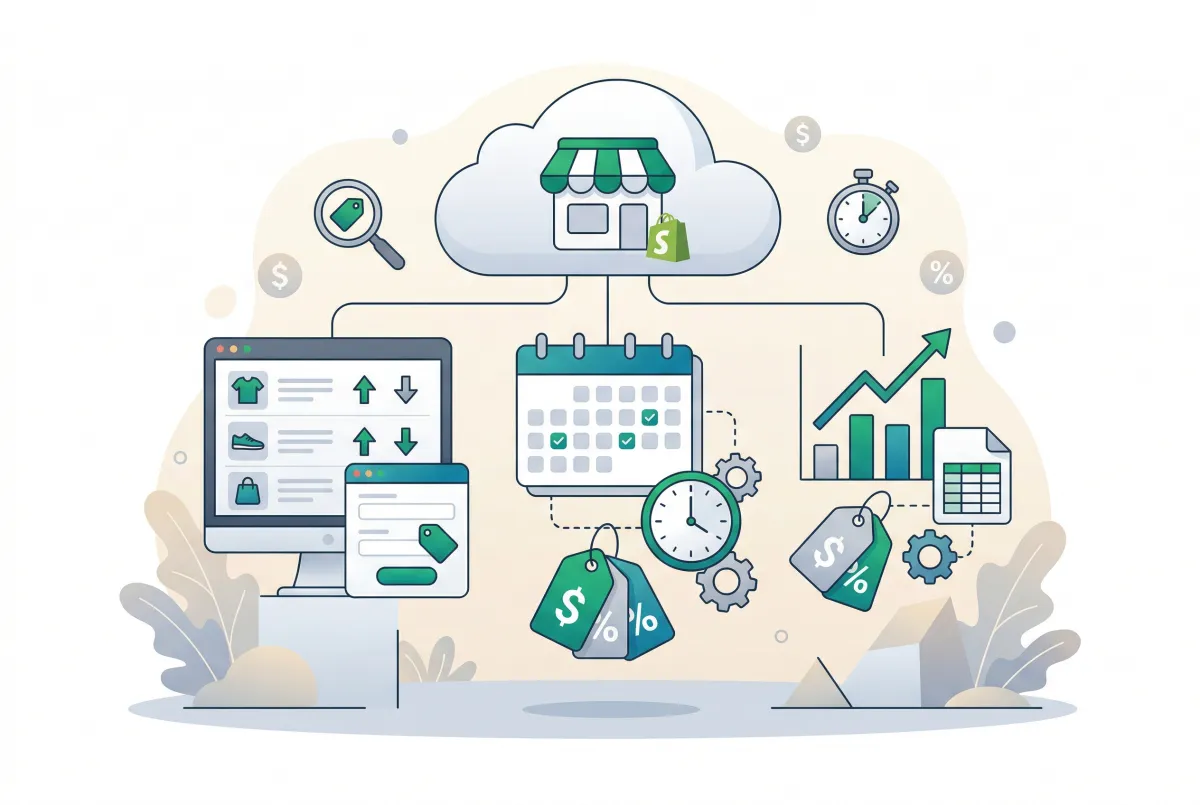
How to Schedule Bulk Price Changes on Shopify (3 Methods That Actually Work)
Three methods to schedule bulk price changes on Shopify: native bulk editor, CSV import, and dedicated apps. Stop updating prices one by one at midnight.
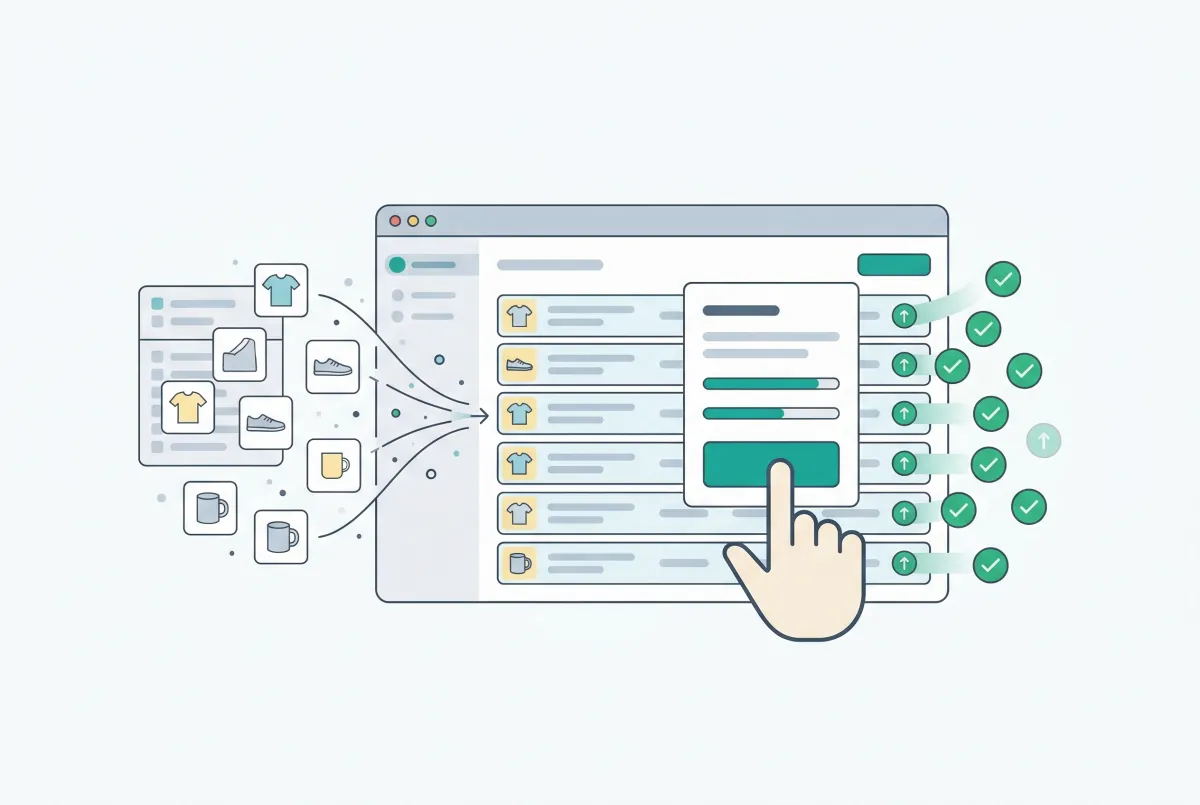
Shopify Bulk Product Editing: The Complete Guide to Updating Your Catalog Fast
Master Shopify bulk product editing with the native editor, CSV imports, and third-party apps. Update prices, tags, and descriptions across your catalog fast.
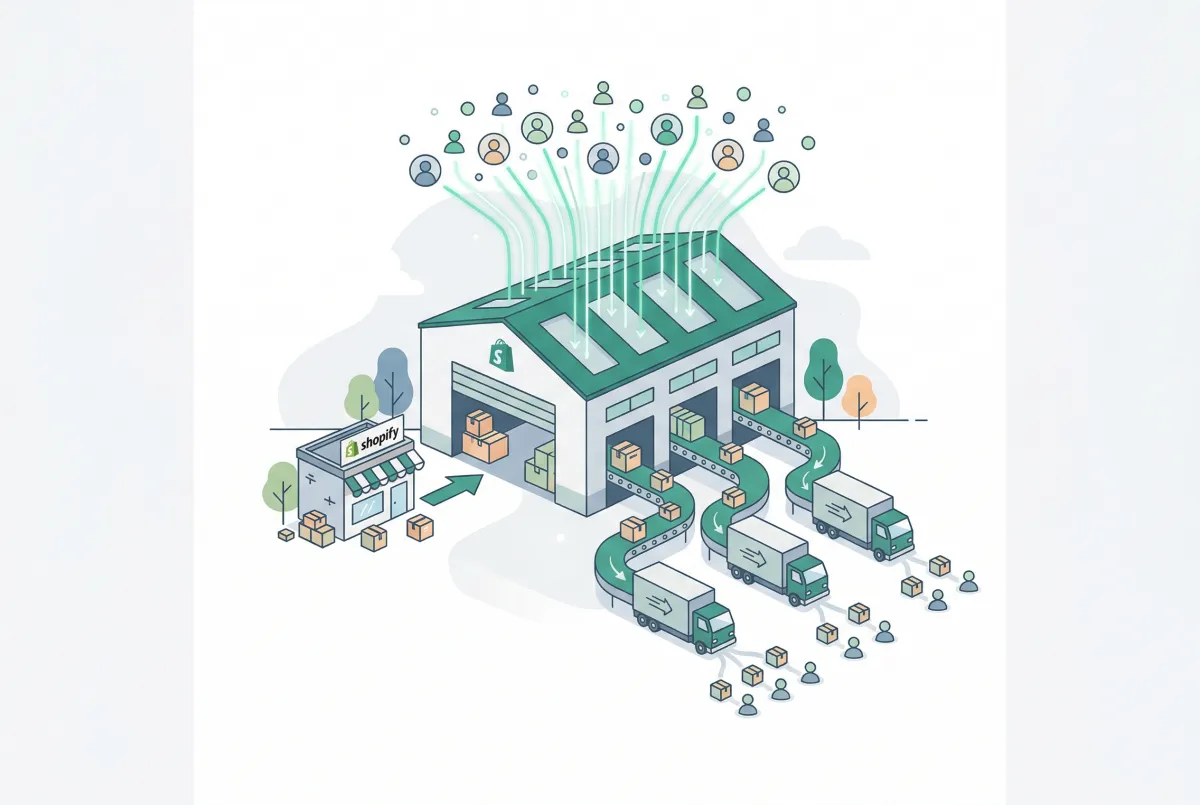
Learn how to build a Shopify store that handles 10x more traffic without crashing. Covers speed optimization, app audits, checkout, and scale readiness.
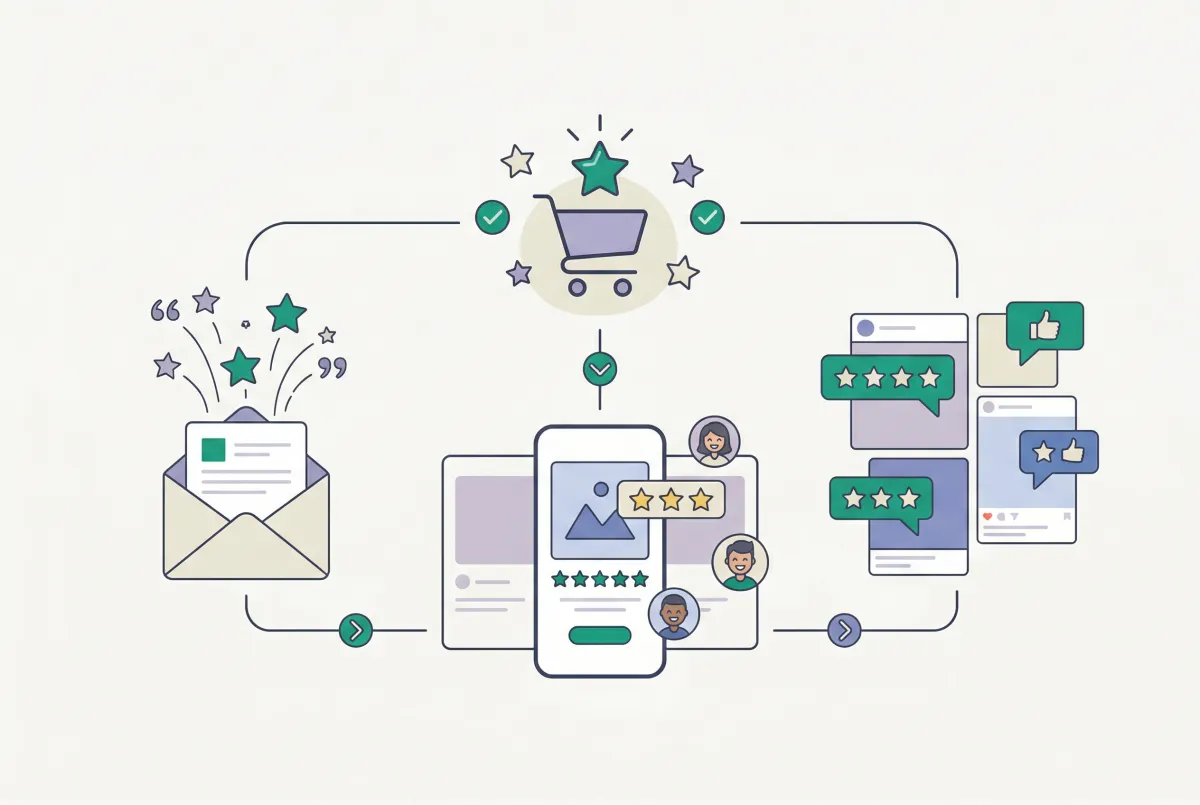
How to Use Customer Reviews in Your Shopify Marketing Strategy (Email, Ads, and Social Media)
Learn how to turn Shopify customer reviews into email campaigns, paid ads, and social media content that builds trust, improves conversions, and sells.